
Zum Hauptinhalt wechseln
Erasmus+ Project

Society in Motion

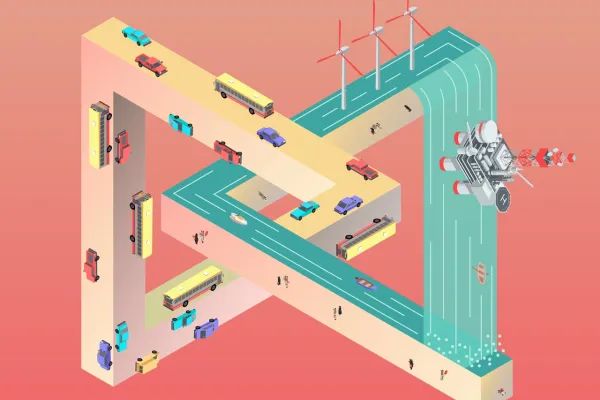
Abstrakte Darstellung einer Gesellschaft mit Strassen, Bohrinsel und Windrädern

Migration is a key driver of urban change across the globe. It has created opportunity for new patterns of urban diversity but will also pose particular social and political challenges in Europe over the coming years. Whilst permanent built environments are essential characteristics of cities, architects should search for solutions that include the needs of today’s flexible life amid the jungle of buildings. Yet a state of regarding migrants as a temporary phenomena gives permission to omit their needs in planning urban settlements. Within this research, we will analyse and identify the consequences of the movement of social and economic capital that people in motion often bring about. This will require study of related networks of social, architectural and spatial fields at multiple scales from local, regional, European and beyond. The ideas and tools we will accumulate will directly question the ongoing legitimacy of existing practices and propose alternatives to the current planning of our cities and settlements.
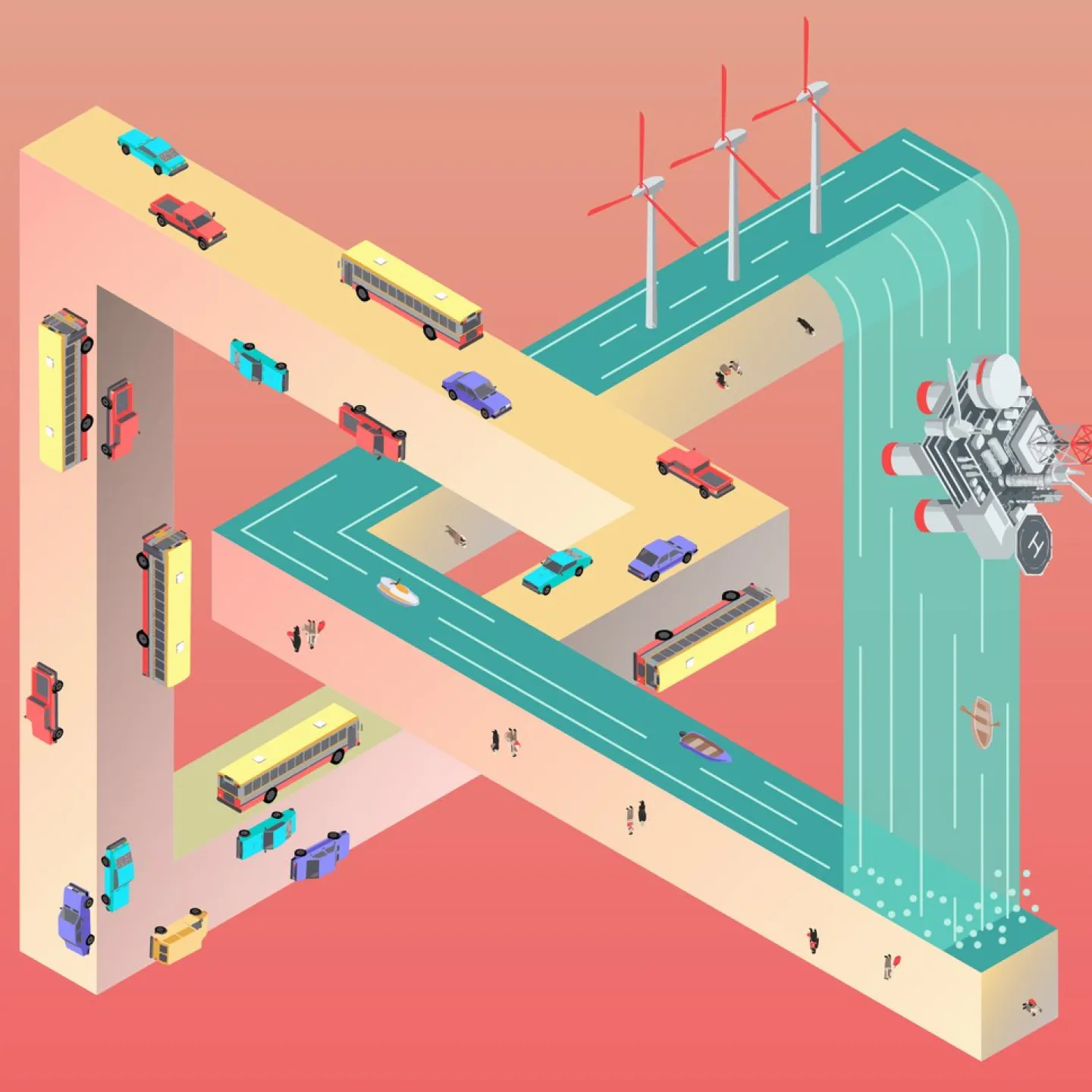
Abstrakte Darstellung einer Gesellschaft mit Strassen, Bohrinsel und Windrädern

The aim of the research project is to investigate architectural and spatial challenges for new emerging society in motion from various perspectives. Hence, the research deals with the social and political issues of people in motion and explores design and spatial opportunities for the actors involved. Furthermore, the project calls a more social justice in planning and for social actions which can take place at various planning levels. In this context, these issues will be discussed in open dialogue together with students, teachers, researchers, local and regional experts and actors.

The research is supported by an additional Erasmus+ grant for strategic partnership for higher education to conduct three workshops together with students and researchers from Bergen Architecture School, Angewandte Wien and the University of Liechtenstein.

The workshops took place in the summer of 2017, 2018 and winter 2019.

Further information on the project is available at: Link

17th May 2019, Lecture Room 6, University of Liechtenstein         
                                                                             
13:00      Arrival + Snacks  
13:30      Welcome
13:40      Clarissa Frommelt, AIBA
13:45      Introduction: CV(e)motion
14:00      Keynote: Kilian Kleinschmidt: Founder of the start-up Switxboard                                                                
14:45      FAQ Kilian Kleinschmidt                                                                                                             
15:00      Break    
15:30      Introduction: Society in Motion Workshop Series
15:40      Workshop 1 “Skilling landscapes borne in Norway”
                with Christian Victor Palmers, Bergen School of Architecture, Norway
16:00      Workshop 2 “Cities to come. Shaping logics of transition, grafted in Vienna”
                with Anton Falkeis, University of Applied Arts, Vienna               
16:20      Workshop 3 “Pendulum Alpine Rhine Valley. Everyday commuting about Liechtenstein”
                with Cornelia Faisst, University of Liechtenstein, Institute of Architecture and Planning
16:40      FAQ - Global & Local Challenges: What are the learnings for Liechtenstein?                                       
17:00      Exhibition Opening and Booklett Launch         
17:30      Apéro


Registration via E-Mail at sim@uni.li

Organzied by
Cornelia Faisst and Clarissa Rhomberg
Institute of Architecture and Planing
University of Liechtenstein

The discovery of Norwegian North Sea oil in December 1969, led to a heady transformation in the built environment and settlement patterns of the nation’s Western coastline. Whilst the broad phenomena of specialist industrialisation and urbanisation has been widely documented, the 2017 «Societies in motion» Summer workshop will seek to uncover the spatial complexities that have evolved in response to the movement patterns of successive generations of skilled labour migrants in Norway. Multi-scalar explorations of shortlisted localities, using various interdisciplinary techniques, will provide opportunity to document and celebrate this half century of technical, cultural, economic and social migration, and to propose enhancement through alternative spatially designed interventions.

The workshop is supported by an Erasmus+ grant for strategic partnership for higher education and took place from July 28th to August 6th 2017 in Bergen Norway together with students and researchers from Bergen School of Architecture, the University of Applied Arts Vienna and the University of Liechtenstein.

Workshop Blog with daily updates

In the future, European cities have to reframe their scope to go beyond the last refugee crisis in 2015. Cities need to provide enabling frameworks and structures for people, societies, and communities to effectively live and work together to ensure that migration is a positive force on the economic, social, and ecological environment. Vienna is a strong example of how the movement of people has shaped the logic of the city over several centuries. Various experts in human rights, law, history, politics, and civil service will discuss current and future challenges in city planning in an interactive and interdisciplinary way during the workshop.
Furthermore, immigrant networks of belongings and attachments will be explored by talking to people living in transitory places. We will build on the known to discover the unknown, looking at history, existing projects, organisations and networks in Vienna to develop urban planning strategies to tackle current issues.

“The history of civilisation is a history of migration.”

The workshop is supported by an Erasmus+ grant for strategic partnership for higher education and took place from July 31st to August 9th 2018 in Vienna, Austria together with students and researchers from Bergen School of Architecture, the University of Applied Arts Vienna and the University of Liechtenstein.

Workshop Blog with daily updates

The nation of 37.600 has formed a perpetual inverse migration, where everyone returns to their homeland upgraded, but it's growth depends on commuters crossing and returning across the border each day. Today the workforce of Liechtenstein is 38.500 strong, more than double the resident working population. The consequence is spilled over in commuting across uncoordinated infrastructures of private and public transportation that are stretched to crisis and an acute need for new regional logics of coordination where today only village and national forms of government organisation exist. Whilst the broad phenomena of industrialisation and the urban sprawl has been widely documented, the 2019 «Societies in motion» Winter workshop will seek to uncover the spatial complexities that have evolved in response to the movement patterns of daily commuting in Liechtenstein. Multi-scalar explorations of various forms of mobility, using various interdisciplinary techniques, will provide opportunity to document and celebrate the story of commuting, and to propose enhancement through alternative spatially designed interventions.

The workshop is supported by an Erasmus+ grant for strategic partnership for higher education and will take place from February 1st to February 10th 2019 in Liechtenstein  together with students and researchers from Bergen School of Architecture, the University of Applied Arts Vienna and the University of Liechtenstein.

Workshop Blog with daily updates

Bergen School of Architecture www.bas.org
University of Applied Arts Vienna www.i-o-a.at
University of Liechtenstein www.uni.li

The project is supported by an Erasmus+ grant for strategic partnership for higher education.

AIBA Agentur für Internationale Bildungsangelegenheiten www.aiba.li